
Omaha’s City Charter Convention (and How to Get Involved Now.)
Image credit: Unsplash.com
Republished from One Omaha
Yesterday, (Mar. 29) Mayor Jean Stothert submitted an ordinance to convene a city charter study convention on May 16. The purpose of the convention is to review the operation of city government under the Home Rule Charter of the City of Omaha, with the possibility of recommending appropriate amendments to benefit the city’s governmental affairs.
A public hearing on the ordinance will be held on April 5.
The Omaha City Council will vote on the ordinance on April 12.
In summary, the ordinance provides:
Convention membership of 15, with individuals representing all segments of the community including minorities, individuals at various income levels, business, and labor representation;
Each member of the Omaha City Council will appoint one member;
Appointment of members by the mayor with the agreement of the city council by resolution;
The convention must convene on Monday, May 16, 2022, and complete its work within 10 weeks thereafter;
The mayor must submit her list of appointments to the city council on or before April 26, 2022;
The convention must utilize, where practicable, city personnel, equipment, and space;
No expenditures shall be made unless first authorized and approved by the mayor and city council and;
The ordinance shall provide for public hearings.

One Omaha has previously written about the upcoming city charter convention. Of note, the last convention, convened in 2013, consisted of 25 members, 11 chosen by Mayor Stothert and 14 chosen by city council members. The final report submitted to the city council contained 18 recommendations.
To be considered for the upcoming city charter convention, contact your city council representative immediately.

We empower people where they live with education, training, and engagement to develop thriving neighborhoods.
3902 Davenport St.
Omaha, NE 68131
402-913-0314
info@oneomaha.org
You may also like:
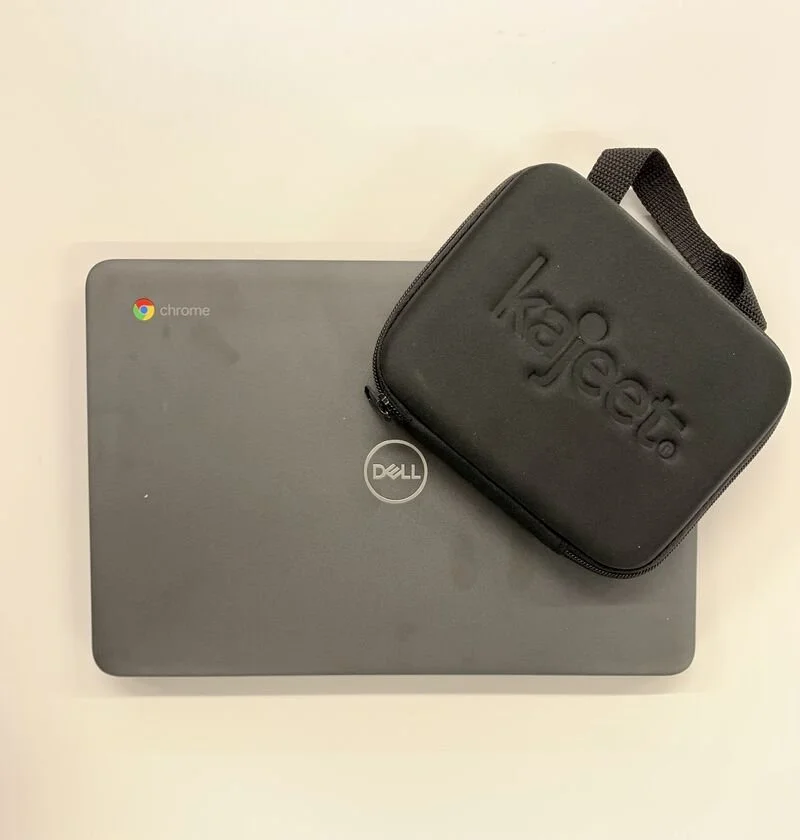
Do Space will distribute 945 free Chromebook computers, mobile hotspots and Internet access to Omahans who do not have access to a computer and Internet service at their home. Individuals who are 18 years or older can apply online to the Do Space Tech Pack program or in person at Do Space at 7205 Dodge St., where paper applications will be available. Hurry! The application period will close in June, 2022.

From Scott Blake: There have been four vacancies on City Council (Reynolds 1958, Friend 1994, Terry 1999, Anzaldo 2000) where the outgoing council member was still on the council, and none of the outgoing council members voted for their replacement and did not participate in the vacancy process. But, Rich Pahls did when he resigned. NOISE is publishing Blake’s letter to the 2022 Charter Convention about why this was allowed.

On June 18 the Poor People’s Campaign is holding the “Mass Poor People’s & Low-Wage Workers’ Assembly and Moral March on Washington and to the Polls.” Organizer Angela Montalvo shares details on how to join the march and some statistics on poverty in Nebraska.

Sen. Megan Hunt writes: On May 2, in a truly unprecedented event, a draft decision on the Dobbs v. Jackson U.S. Supreme Court case was leaked to the public. If that opinion becomes final, it will strike down Roe v. Wade and set back fundamental rights in this country by half a century. It’s important to note this is not yet an official ruling—but in Nebraska, we should prepare for the worst.

HURRY UP! If you want to participate in the Omaha city charter convention, a public hearing will take place on Apr. 5 and a vote by the city council will take place on Apr. 12 to start the convention by May 16, 2022. The last conventions were in 2003 and 2013 so the next convention was expected to be in 2023. Why the rush? We don’t know. NOISE is republishing a blog from One Omaha so citizens know how to get involved on short notice and some tips on testifying before city council this Tues. Apr. 5.

“Two years ago, very few Nebraskans — and hardly any Americans — had even heard of critical race theory (CRT), which lived in rarified academic circles,” writes former executive editor of the Omaha World Herald, Randy Essex, a native Nebraskan from rural Beatrice. Essex explains what CRT is, what it is not, and offers some examples to illustrate why Nebraskans should have no fear in learning about how America’s history of racial injustice shapes the present.

UNO Chancellor Joanne Li celebrates the steps UNO has taken to ensure that “every Maverick has a seat at the table.” She traces this commitment back to 1969 when 54 Black students were arrested for protesting their voicelessness on campus. Li pays tribute to some of the many alumni who have chosen to give back to the community. She writes, “The challenge we face today as Nebraskans and as a nation is that not enough people have the opportunity to grow as individuals and apply their talents to their community.”

Sarah Johnson, former city council candidate in District 1, has been a fixture at weekly council meetings. After the vote to demolish the W. Dale Clark library and give the land to Mutual of Omaha to build a corporate headquarters, she has decided that she’s can’t take it anymore. Johnson writes, “You won’t find me wasting my energy with “public engagement” at city hall any longer.

A library cardholder since before she learned to write, NOISEmaker Michaela Wolf laments the loss of the library overlooking the Gene Leahy Mall. Wolf questions why such decisions are made behind closed doors in our final community response piece about the demolition of the central library.

“It does not take a library lover to see the message implicit in the decision to anchor the new Gene Leahy Mall with a corporate headquarters instead of a library,” writes Pete Fey, a former employee at the W. Dale Clark library. “Business rules Omaha. Whatever we can do collectively, for the good of all, runs a distant second to the private accomplishments of the few.” If you want to weigh in on the city’s decision to demolish the downtown library, use NOISE’s “contact us” form to send us a letter.

“Black people do exist in Omaha, but you wouldn’t know it from the conversations about its future,” writes Ja Keen Fox in an editorial about the recent decision to tear down the W. Dale Clark library to make way for a new headquarters for Mutual of Omaha— replacing public space with private property. Fox noticed that a recent Omaha World Herald article soliciting opinions about the fate of the library and construction of a streetcar contained 15 opinions about the decision: none of them from Black Omahans. “We remain ignored,” he writes.

Moving "thousands of books, photographs, maps, etc. to different locations will take time to plan, orchestrate, and do right. It’s not a trivial task," writes Edwin C. Schroeder, a retired librarian and director of rare books at Yale University who shares his perspective on the new library plan in a NOISE opinion piece.

The legislative session is currently underway and there have been multiple bills introduced to strip Nebraskans’ rights and access to quality health care including abortions. One of the bans introduced (LB 781) would eliminate abortion access at approximately six weeks, before most people even know they’re pregnant, and the other (LB 933) would ban abortions altogether if the U.S. Supreme Court reverses Roe v. Wade at the end of this term.
Academy Award winning director Alexander Payne often portrays Omaha, his hometown on screen. But, with a significant lack of people of color, do his films accurately represent the diverse city that Omaha is today? Or do they portray only Payne's personal remembrance of Omaha, which seems to be firmly rooted in the past.
Guest columnist Abbey Kegley, who studied film at UNL, shares her opinion of whether Payne's films represent the city that she also calls home. Kegley breakdown of the presence of people of color in Payne's Omaha, as part of the latest article featured on our community response page.
The strong mayor system is why Omaha's mayor can make major decisions, such as tearing down a library to offer the land to a Fortune 500 company to build a new headquarters, without first consulting the city council.
The "strong mayor/ weak council" is a system in which the mayor has considerable authority over the day-to-day operations of the city government, much like the CEO of a business. By comparison, the city council operates more like a company's board of directors.
How did we get a strong mayor and weak council? More importantly, can it be changed? In a community response piece, Pete Fey weighs in on the history of the Omaha City Charter Convention with an eye on 2023 when the next convention will take place.