
Prison Rape Elimination Act in Nebraska: Does it Help Victims or Punish Them?
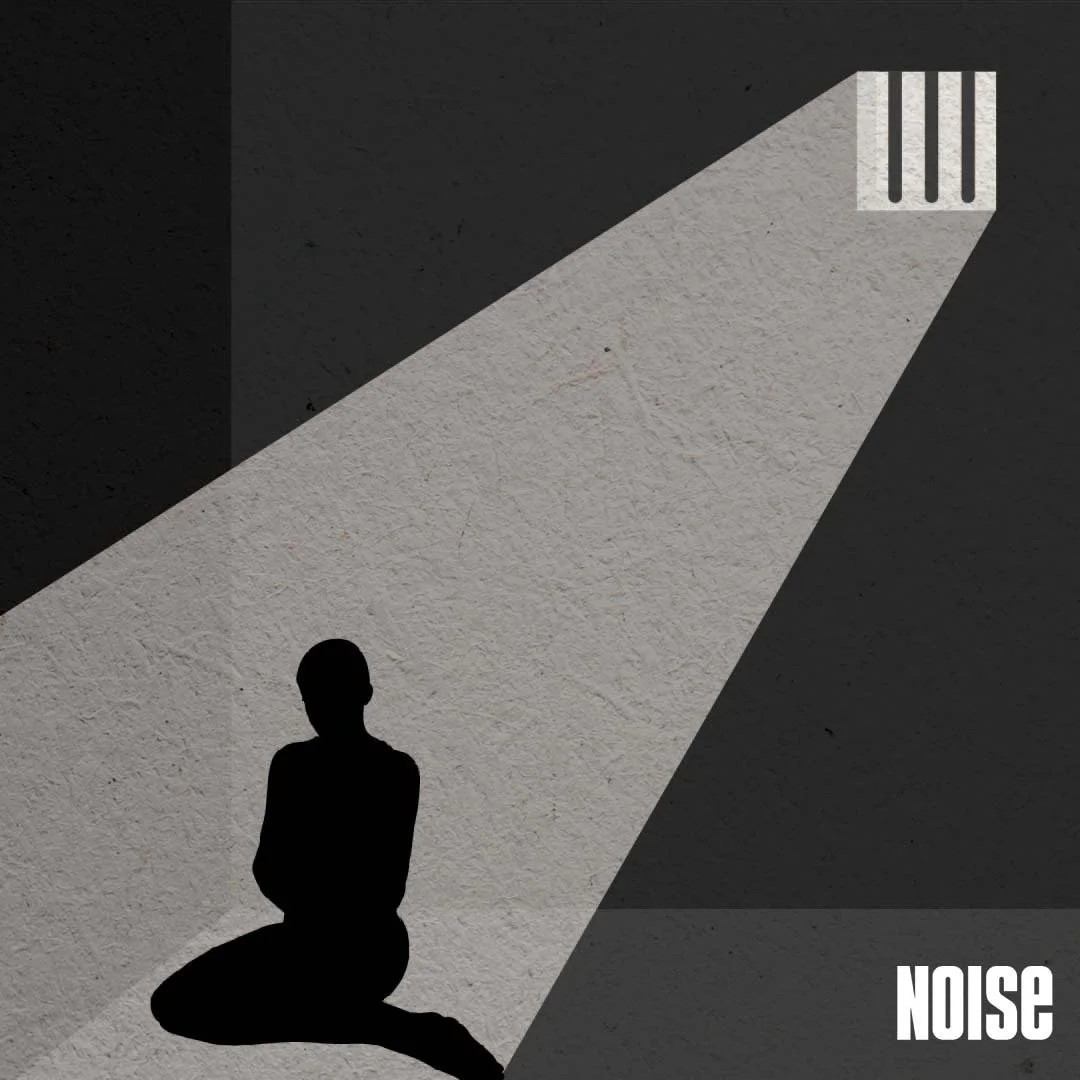
Graphic by: NOISEmaker, Lyndsay Dunn
By Vivian Caniglia
The Prison Rape Elimination Act (PREA) was passed in 2003 to end sexual violence within the prison system. Alongside providing resources for incarcerated individuals, PREA collects data and intends to prevent, detect, and respond to investigations and cases of sexual assault, sexual abuse, and sexual harassment within state facilities.
In 2012, the Department of Justice implemented regulations and standards of compliance that include: prevention planning, responsive planning, training and education, screening for risk of sexual victimization and abuse, reporting, medical and mental care, and more.
Compliance with these standards is encouraged through the U.S. Department of Justice (DOJ) grant program, Implementing the PREA Standards, Protecting Inmates, and Safeguarding Communities, which is conditional on the state meeting compliance requirements. Each year, the state governor must certify that these standards are being met or report a lack of compliance or assurance. Filing assurance status means the state guarantees a plan using DOJ funding must return to full compliance within a reasonable timeframe. If the state files out of compliance, it is subject to a five percent loss of DOJ funding.
Due to a tip claiming that Nebraska PREA was out of compliance, in July of 2021 NOISE spoke with Tia Manning, the previous PREA advocacy coordinator from the Nebraska Coalition to End Sexual and Domestic Violence in Nebraska.
In June, the Nebraska Coalition ended its services to Nebraska’s prison facilities. Due to the COVID-19 pandemic, the coalition faced increased restrictions. As Manning explained, workers from the coalition were barred from entering facilities so communication between them and inmates was through phone calls or letters sent through the mail. Manning noted that over quarterly time periods during the pandemic, the coalition would receive roughly 4-5 calls within a few months' time. Additionally, communication between the coalition and inmates is intended to be completely confidential, but Manning said this was not always the case because mail leaving prison facilities is screened.
“Inmates often fear the consequential actions investigations can bring, including being placed into confinement, therefore, losing other facility resources, or being moved to alternate facilities.”
In May, the coalition contacted the state prison facilities, formally asking via letter, for upgraded communication standards with inmates. Due to lack of response, they ended their services and partnership with Nebraska PREA. This meant that the state would have until December of 2021 to partner with a new advocacy coordinator or file for the assurance with the DOJ and provide a plan to improve in order to maintain grant funding. The state returned to compliance in September of 2021 by partnering with the Women’s Center for Advancement. At this time, services through the WCA still have the same prior restrictions the coalition faced during the beginning of the pandemic, meaning they can only connect with inmates through a hotline or letters.
The pandemic created a stall in PREA services with COVID precautions, but questions about the efficacy of the act existed even before. As previously mentioned, the availability of a hotline or email may not always remain confidential due to facility screenings. With no entry to facilities during the pandemic, Manning had no confirmation that flyers with resource information were publicly posted for inmates to see.
Manning reflected on the complications of investigations into any sexual assault or harassment cases. If an inmate were to disclose an incident, the coalition is required to receive formal documentation and consent from the inmate to investigate. Due to the pandemic, this process is often slowed down by outgoing mail procedures and is not always completed. According to Manning, inmates often fear the consequential actions investigations can bring, including being placed into confinement, thereby losing other facility resources, or being moved to alternate facilities. While these movements are made for inmate safety, previously and into the pandemic, these actions can prevent inmates from receiving visitation hours or, if moved to other facilities, losing visitor connections overall.
While Nebraska returned to compliance with federal standards, advocacy groups, like Black and Pink, raised concerns that PREA implementation is harmful in its current status and lacks legal consequences beyond funding removal. As inmates are brought into prison facilities, administration surveys determine whether the individual is likely to be a victim or predator of sexual assault. PREA regulations explain that if an individual is deemed a risk, they are separated from other inmates for protection, monitored closely, and given separate time for activities such as showering.
In an interview with Dominique Morgan, founder and executive director of Black and Pink, Morgan explained that a majority of the time, this protection means inmates are placed within solitary confinement, losing access to resources such as substance abuse treatment and more, in addition to the mental distress created by solitary confinement. Solitary confinement often targets the LGBTQ+ community and POC (people of color) who are marked for higher rates of sexualization and assault. Morgan expressed that rather than help inmates in the LGBTQ+ and POC communities, PREA enforcement often is more like punishment than aid.
“A majority of the time, this protection means inmates are placed within solitary confinement, losing access to resources such as substance abuse treatment and more, in addition to the mental distress created by solitary confinement.”
Alongside concerns with PREA’s efficacy, research into the data and handling of investigations is often vague and limited. Staff members are trained to handle assault and harassment investigations which are deemed either substantiated, unsubstantiated or unfounded. Manning explained that if a case is formally investigated, a preliminary investigation will be conducted and supervising staff will then do interviews and review evidence. In the PREA 2020 annual assessment, 68 investigations were reported, while only 13 were substantiated, with 32 unsubstantiated and 16 unfounded. The startling number of investigations brought forward compared to those found substantiated raises concerns about the reliability of case investigations.
A 2007 article in a DOJ publication, Investigating Sexual Assaults in Correctional Facilities, includes staff perspectives on the correctional response to sexual assault.
Staff reported inmate reluctance to participate for fear of retaliation or lack of compassion from interviewers, difficulty validating claims due to insufficient evidence, and inadequate protocols and lack of training in investigating prison rapes and sexual assault, and a lack of collaboration/communication between departments.
More than fifteen years after the DOJ publication, data for PREA is still limited. Written assessments of state facilities are bundled in three-year periods, the current running from 2020-2022. The official three-year audit report for PREA will not be available until 2023. The annual reports include the number of incidents initiated by inmates or corrections staff, investigation findings and facility audit dates. The aggregate data does not indicate whether the assault occurred in a men’s or women’s facility. NOISE reached out to Daniel Reynolds, the Nebraska PREA coordinator, for more information on these topics and received no response.
Despite an official return to compliance, available information and data on PREA raise questions about its efficacy. In August of 2020, the Office of Inspector General of Corrections provided a summary and review of PREA. The official report for 2021 is not available yet. As recently as Jan. 11, 2022 an assistant warden with the Department of Corrections was arrested for sexual abuse of an inmate.
In addition to eliminating limitations posed by the pandemic, system-wide research and reform of PREA seems warranted in the future.


